Showing posts with label pests. Show all posts

Thursday, 19 December 2013

Has bean

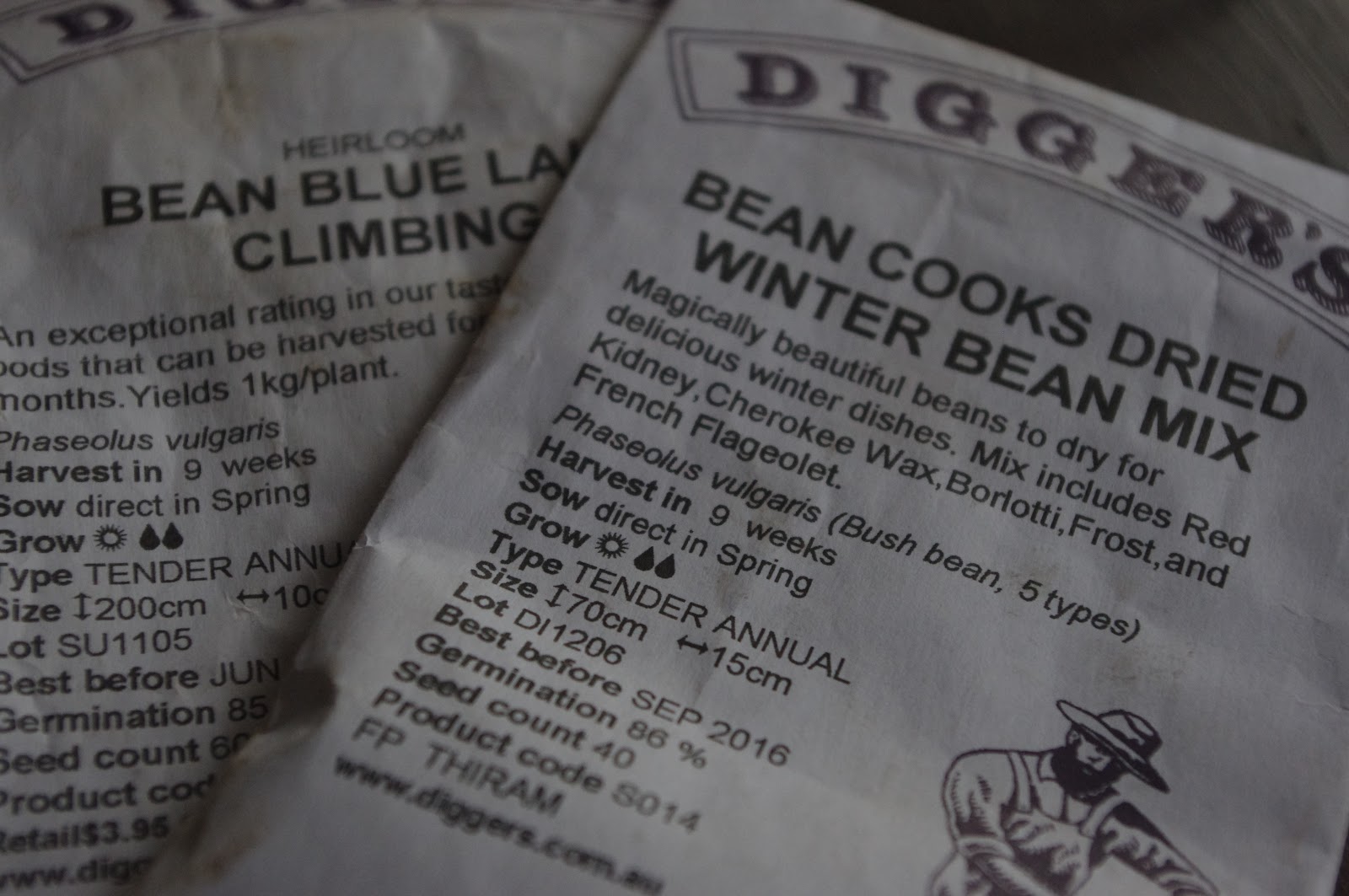
My borlotti beans are now largely has beans.


They were planted quite early for us ( in September) and most survived the late October frost. They have produced a few beans for me - I ate them at their green stage as there was little else coming from the patch at the time. I found them quite good green.


But then they started to turn yellow and wither. On pulling the plants up I found that many of their roots had been nibbled off.


I suspect it's the chafer grub.

Certainly I find them when I am digging thru the patch. I usually toss them to the chooks when I find them.The chooks just love them. Looks like the girls will have to do some work for me!

But here is the weird thing, it seems that it is only the borlotti beans that are effected.

Why is that? Other beans are thriving as are other plants in the neighbouring beds.

Have you any idea what's happening?


Monday, 20 May 2013

Aphid invasion!

Never in my life have I had an aphid invasion like this one!


Aphids have been thick on my savoy cabbages, coating the leaves with their greyness and hiding away in the folds of the forming cabbages.

The other day I decided to make a garlic spray and hit them hard.
I didn't note the quantities of the garlic spray I made up but it went something like this.

Garlic Spray

2 cups water
3 large garlic cloves finely cut up
a tiny little dash of olive oil

Pop water and garlic into a saucepan and boil up. You can kind of smell when the water has taken on the garlic odour. Cool a little before straining into a pump spay bottle. Add the olive oil and shake. When the mix is cool spray offending aphids.

Red Drumhead and Mini Wombok
Yesterday I checked to see the results and yay, hundreds, thousands of dead aphids! (I didn't take a photo unfortunately, so you'll just have to believe me.)

Now, one more problem to solve... how to get them off the cabbage. I decided on a hefty spray with the hose - just as well we have had plenty of rain lately otherwise I would hesitate using precious water in this way. This seems to have worked.

Bizarrely, it is only the Savoy cabbages that have been affected. I have Red Drumhead, Mini Cabbage and Mini Wombok in addition to the Savoys in and they are all clean. So what is it about Savoys?

As for my other brassicas, they are all doing well except for those within beak reach of the marauding chooky girls. I have lost three immature cauliflower plants to their ability to peck thru wire mesh!

How do you deal with your aphid issues? How are your cabbages?

aphid-free Savoy cabbage ( minus bloom)

Thursday, 17 January 2013

Beating the tip nippers - experiment

A while ago now, I posted about my beans beating defeated by Mystery Tip Nippers. With a new patch, I decided to plant lots of bean seeds - some for eating green and yellow and some for drying and storing, all for adding nitrogen to the soil to start the patch off  in the best possible way.

But after putting loads of beans in most suffered from having their growing tips nipped out. With their first proper leaves being taken out the plants quickly died. Those that managed (by luck) to avoid the tip nippers  (possibly earwigs) were badly affected by the unrelenting heat we have had.

Stubbornly determined to get some beans this summer I have decided on two anti-tip nipping experiments.

Experiment 1: Hiding the beans


As no pests seem to be worrying my radish, beetroot and rocket rows, I have decided to see if I can deceive the tip nippers by hiding  my beans amongst them. I have put a row of bush beans (ones with black seeds) behind the radish and in front of my beetroot and rocket. Perhaps the other plants will put the tip nippers off? That's what I am hoping anyway.

Experiment 2: The barrier method 


I have put plastic cuffs around the planted bean seeds. Out of 3 whole rows of borlotti, I had only one bean plant left in the ground and 6 seeds left in the packet. I have put all those 6  in with cuffs from juice and milk containers protecting them - hopefully.

To deal with the heat problem, I have mulched everything heavily with lots of lucerne.

Let's see what happens!

Sunday, 16 December 2012

Mystery tip nipper

One of the first seeds I put in the new patch were climbing bean seeds. I put in a row of Blue Lake as soon as I had a bed and wire for them and they came out of the ground quickly and strongly. In fact, while I didn't count, I think I got pretty much a 100% germination? Yippee! - off and running.

I am growing lots of beans this season, of course because I like eating them, but also because I want all they can offer - their food value as well as their nitrogen fixing nodules to contribute to the ongoing fertility of the hastily built beds.

Here is what I have in :
  • Climbing beans - Blue Lake
  • Dwarf beans for eating green - Sex without strings (strange name) a yellow bean
  • Dwarf beans for drying - Red kidney, Borlotti, Cherokee wax

But I have a problem - I have a mystery tip nipper. As mentioned, the Blue Lake came up quickly and well and looked fantastically strong little plants.  But something was odd, they didn't seem to go past their cotyledon stage (the first two baby leaves of a plant). Surely they'd start to send up their first real leaves and their searching tendril-like thin stem looking for the wire to support them and they'd get climbing soon, right?


I kept looking each morning for action, but there was none, what was wrong? Down on my hands and knees I closely inspected the growing tip of the Blue Lakes - it seem as if they have been nipped out!


Every single one of the baby plants has had this treatment - just as if I had used my (dirty) finger nails to take the tip out myself. 

What on earth would nip out the new growing tip of a bean plant? I have grown beans for years and years and never seen this happen before. There was no other damage - no slug activity, no nipping off at ground level which might indicate cut worms, no eating of the whole plants, no obvious foot prints of wallaby or possum...


Who is my mystery tip nipper - any ideas? And any ideas on how I can protect the other beans about to burst out of the ground?

Here I am mid-December and beans stuck at cotyledon stage forever.  Better get sowing another row!

Tuesday, 2 October 2012

Battling the stink bug

Hmm, the stink bug - horrible creature. A tribe of stink bugs can destroy your citrus crop pretty quickly if left alone to do its evil work!


This post may be of limited interest to those who don't have to suffer this beast as the stink bug is an Australian native pest of the warmer climes only. Lucky are those that don't have to endure it.

 It is otherwise known as the bronze orange bug, the name 'stink bug' suits it well because you can normally smell them before you can see them.


Native finger lime  'Collette' in front of one of my espaliered limes
Before Europeans brought their citrus plants to Australia, the stink bug fed on the native Finger lime.  ( Oh all the poor little Collettes!).

The baby and adolescent stink bug looks so cute and innocent, lovely green and orange respectively with that cute little spot on their back. But they suck the citrus sap from the tender tops of your citrus plants, wilt the growing tips and cause any newly forming fruit to shrivel, turn black and fall off.

Last year I lost a whole crop of Tahitian Limes to the stink bug.  In early October I had started my stink bug surveillance. My method that time was to knock them off the tree and stomp on them or cut them in half with my secateurs.  Foolishly, I set about doing this with no protection at all.  Result?  The stink bug's defence is to spray highly concentrated citric acid and the beast sprayed me in the eye.

If I said this was extremely painful it would be an understatement. Thankfully I had some water at hand and bathed my eye and headed to the optomopterist  then next day, where he declared in a sombre tone, "you are very lucky".

I then headed overseas for work armed with eye antibiotics and returned to find my lime trees totally devastated.  All new stems were black and drooping and only a few tiny fruit were left on the trees.

You just cannot let stink bugs lie, you have to do something about them.Yesterday, I needed to go into battle with something more than a pair of secateurs.


This may seem like overkill, but believe me it isn't. Chastened by last year's burnt eye ball, I knew I needed better protection. So I borrowed my lad's chainsaw mask, got a dish washing glove from the kitchen and made me deadly brew -  a mix of kerosene and water in a bucket. Wearing long sleeves I went into battle picking off the bugs one by one putting them into my mix.  It killed them instantly.


I fished them out and re-bottled the mix ready for my next attack. I will have to do this a few times to get them all.  My aim will be to get the young ones in their cute orange and green form before they turn into the huge black armour plated nightmare version. View if you have the stomach.  A warning -  this link takes you to scenes of insect sexual activity and my be offensive to some viewers.

My lovely lad said on seeing these photos, " it's hard to love some of gods creatures isn't it!"

Sunday, 30 September 2012

Spring in the patch

It's spring in the patch and here is what is happening.

Baby vegetables
I have just started to pick my first baby radishes of the season. I deliberately pick them small as this is the first thinning I do. I sow thickly and only thin when the first small round roots have formed. Then there is more room for the others.


Dipped in hummus don't you think?

Fruit on the way
The first of the tomatoes has set - this is a cherry. (Oh dear, it's a bit blurry!)


And Collette the finger lime is flowering like crazy and starting to set their tiny fruit. It will turn black soon and hopefully start to thicken. The fruit that set in March either fell off or was stolen by a curious currawong?


Flowers
I grow a lot of flowers in my vegetable patch,  I just like a little bit of colour and they do bring the bees.  Right now the violas are spectacular.


And my self sown poppies are just starting to flower.  I collected seed for these poppies many years ago now when I came a cross a deserted house with a wild garden in Tarcutta (or was it Holbrook?).We were on our way down to the Wangarratta Jazz Festival and stopped off for a rest and a coffee. The round dried heads of poppies were just beautiful and so I collected some. I didn't know what they would produce, but I love the colour of these blooms and the grey green of their foliage.


When they have dried off I collect some dried heads to take inside as a dried display and sprinkle the seeds where I want them to come up next year. They just keep coming up every year, where ever they want to regardless of my attempt to place them in certain locations. I try to make space for them each time as they are great bee magnets. The bees circle around and around inside the cup of the petals, it's funny to watch.

And my thyme is flowering, also bringing bees. They are such a delicate mauve. This bunch came inside and went into last night's meal.


The last of the snow peas
This is the third and last planting of my snow peas. There is plenty of really good fruit to come and plenty of flowers. But they will soon be finished and I will have to wait for the cooler season for them again. Heaven on a stalk.


Pests
You smell them before you see them and then when you see them you despair. Stink bugs.


I HAVE to do something about these blighters today otherwise there will be no limes. You can see them sucking the stems behind the newly set fruit.  They will be come the subject of an entire post.

And the lovely snail.


This poor lettuce was ravaged overnight! Turn your back and they slime out of their hiding spots and munch.

New life
It only took one warm day and the frogs got going!

Sunday, 12 August 2012

Potting, raising, inspecting

The weather here has been a bit crazy lately.  We went through a patch of beautiful spring-like days in their low 20s and then, last week, that changed.  The wind blew in and brought winter back, trees came down and the new seedlings that had emerged during the warm spell, shivered in their soil.  They did - I could see them moving and could see their goosebumps too!

Across Sydney trees came down and branches snapped off and leaves blew. We had no damage here, but I hope other Sydney bloggers kept their trees and electricity. While it's still coldish today, the wind has dropped and the forecast says we are to return to warmer sunniness.

Today I potted up, raised seeds and inspected the progress.


Potting up 
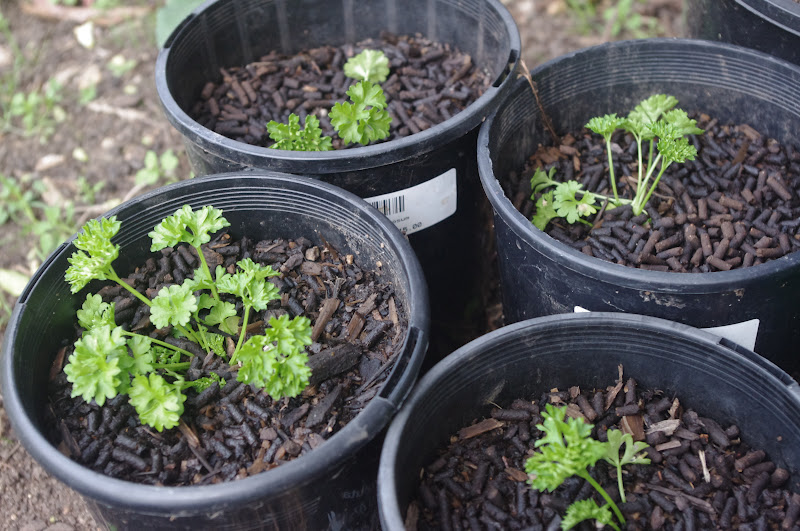
I potted up some mint and some curled parsley. I also moved some self-seeded violas around.

I always have violas in the vegetable patch.  I just think they are so pretty and, because they self-seed so easily, they just keep coming back sometimes in slightly different colour combinations than last year.

The self-seeded violas invariably pop up in odd places -  little corners and cracks between the patch boarders, in the patch pathway, or in the middle of the patch where you'd want to plant your veggies.


So digging them out and moving them around or potting them up becomes pretty essential.

I must say that one of my favourite things to do in the garden is dead head the violas... strange hey?  There is something very meditative about removing the spent flowers to make sure the flowers continue. Do you like dead heading?

Raising seed
I also started raising some basil, long cayenne chillies, lemon balm, dill and zucchini.

I must say I have grown fond of zucchini (is that a pun?). They can take up a huge amount of space and can be almost scarily productive, and you can wonder what to do with them... but last summer I decided to get into finding  zucchini recipes I liked and had some success ( and it wasn't that hard).

I am kind of looking forward now to the next zucchini glut so that I  can make make those recipes again and perhaps find others I like (any suggestions of your favourite zucchini recipes?).

Being such an easy vegetable to grow, once you do find things you like to eat with the glut, for me including them in the patch becomes essential. But I know others feel differently.

Inspecting
I also looked around the patch a little... things are happening.


The espaliered Tahitian limes are flowering like crazy.  I can see that, if some of the limes don't drop off, I am going to have to take some fruit off.


My relatively recently purchased blueberries first fruit are starting to swell.  The bees love these plants and are doing a good job of pollinating!


And the pests are turning up -  sorry for this blurry photo, but amongst the blur you can see the black aphids on my chives. I spent some time squashing them with my fingers.

That's where I am up to, what is getting going in your patch - fruit, flowers, pests?

Monday, 23 July 2012

Citrus update

My lemon in March '12
Today I did a bit of work on the citrus.

Back in March I introduced my citrus to you via my post Citrus celebration.  I have one large lemon tree, two espaliered Tahitian limes and a finger lime called 'Collette'.

Finger limes are Australian native plants that produce the weirdest long thin citrus fruit in crazy colours. Collete is shiny black on the outside and dark green on the inside (apparently -  she hasn't fruited yet). When you cut the thin skin of a finger lime, the little bubbles of citrus cascade out of the plant. When you eat them the little bubbles 'pop' in your mouth. They are amazing.

My citrus are the best things in my patch. 
If I were only allowed to grow one thing,  I'd probably rebel. But if I really, really were only permitted to grow only one thing on pain of death, I'd choose citrus (although I might think for a minute about eggplants or chillies) but I'd still protest.

I use my lemons and limes all the time and I can hardly imagine two days in a row without a lemon. I am fortunate enough to not have to buy lemons as I am now in the privileged situation to be able to provide my own.  It's wonderful. In summer, limes are essential for the G&T on the back verandah and for the Asian food that gets eaten in vast quantities. One day I will never have to buy a lime.


The plants are so pretty.  Dark leaves (when they are fed properly!), sweet fragrant flowers. "Lemon tree, very pretty and the lemon flower is sweet, but the fruit of the poor lemon is impossible to eat" - you know the song? 
You can make an incredible variety of things with citrus - savoury, sweet, Asian, Western, sauces, pickled, marmalade, curd, cordial...


Alright, that's enough..
.today it was time to do a bit of tidying up. 


It's a great time of year to do a bit of citrus inspection and maintenance. At this time of year - at least in Sydney - the leaf growth is thinner so you can move about in your citrus a little easier and you can see what's happening.  It's also the time of year when stems start sprouting new leaves and tiny flower buds are starting to form so you can see which parts of the plant are thriving and which parts aren't.

This is what I got up to.

1. Pruning the lemon and the limes
I spent a bit of time looking thru the lemon and the limes to see if there was any dead or barren stems. What do I mean  by 'barren'? This might be my term... not sure, what I mean is stems that are still green but there  doesn't appear to be any new growth coming on. The 'barren' stems and dead ones got cut out.

When I had done that I also looked at opening up the lemon by cutting out weak, thin stems and ones that overlapped.  I also took out branches that had rubbed up against the fence.

Quite a lot of material was taken out of the lemon.  I wish I had take a before and after picture, but I didn't, but here are some of the bits that came off.


2. Shaping the espaliered limes
Some of the wires onto which my limes are espaliered had come loose so I got the hammer and those little u-shaped nails and  re-strung some of the wires. Then I tied  any of the main stems that had come loose on to the wires.

I did a bit of shaping the lower branches to shorten them to make sure the whole plant was getting sun.  There wasn't much to do really, most of the work was done in the pruning above. I don't pretend to be an expert on espaliers at all, but they work and look good and fruit so I am happy with my efforts.

3. Inspecting the leaves
Hmm, lots of citrus leaf miner, particularly in the lemon and the need for a big feed!  I don't do anything about my citrus leaf miner, but gosh the plants really DO need a feed. Some of the leaves are quite light-green or yellowing. They will get better.

4. Enjoyed the fruit and flowers
Then I just spent some time enjoying the fruit and flowers...


The lime flowers come out before the lemon flowers.
Such beautiful lime flowers...they are so white and classically shaped! And look at those little baby limes in the middle...


I still have many lemons on the tree that are basically ready to pick and there are more baby lemons to come.

I am contemplating my next lemon and lime glut, mmmm...


There are some limes as well but they are not ready yet and lots of lime flowers in different stages of development. It's exciting to contemplate the next flush of fruit.

5. Inspected and fed my finger lime
And what of  'Collette' the finger lime?  Well she is well and still in her pot.  Back in March she flowered, the loveliest small citrus flowers and then set fruit.  But the fruit haven't developed at all in all that time.  They are still tiny.  Can you see the tiny purple long fruit in the centre of the picture? And off to the left?  I don't blame you if you cant! They are no longer than they were in March! What have they been doing?


Is it a seasonal thing?  Do they get going when the weather warms up? Or are they duds? Does anyone know? Perhaps our more sub-tropical Australians? Is there anyone out there north of Coff's Harbour? Port Mac?

Sunday, 18 March 2012

What's happening in the garden?

finger lime flower bud
Picked
  • chives for the poached eggs for breakfast
  • basil for lunch 
  • lemons - they just keep falling off
Planted
  •  savoy cabbage seedlings
  • spring onion seedlings
 Other
  • feed the citrus and eggplants with seasol, chicken manure pellets and iron chelates
limes on the way


While the pickings are quite slim, there is quite a lot going on in the patch.

Firstly, on the citrus... the big news is that 'Collete' the finger lime is flowering!  Or rather she has 4 tiny flower buds. They are unbelievably small and a delicate pink and look rather like tiny rose buds. They are quite beautiful.


chrysalis of a pink horned grub

The Tahitian lime too is flowering, unfortunately in amongst leaves that are badly affected by citrus leaf miner. However, my guess is that now the weather is cooler,  the stink bugs wont get these babies.

The large grub that I spotted in the lime last week has turned into a chrysalis.  Here it is, it looks like a fat leaf.  Looking at it live, it occasionally wiggles inside its hardening case. I wonder if it is garden friend or pest?  In any case, I am leaving it where it is, it is fascinating to watch. I wonder if it will make a beautiful butterfly?

a fist full of lemon


The lemon tree keeps dropping fruit.  I get dirty knees from crawling under the tree in amongst the lawn clipping mulch to collect them. Some of the fruit are enormous.  Take a look at this fist full of lemon!  It looks a little green on the outside but the inside is full to bursting of really juicy flesh and anyway I think the tree is happy to have dropped these heavy fruit - the limbs are quite weighed down in parts.  


praying mantis in lemon


The lime and lemon are regularly visited by these smaller praying mantis.  Last week, without camera, I saw one like this (perhaps even this one) sitting near the previously mentioned lime flowers eating a bee which had probably come to do some pollinating. Again terrible citrus leaf miner attack and leaves that needed the feeding I gave them today!

The brown berry tomatoes are still going strong.  While all other tomato plants weakened and have been removed, these ones are busy setting fruit.  I do wonder if they will ripen, but in the meantime I am leaving them do their thing.


brown berry tomatoes setting


Fennel seeds planted a while a go now are starting to come up.  However I  fear I have lost many during the heavy rain -  possibly washed away or just rotted. Only about 5 of around 15 have come up.  I will wait a while to see if any more emerge and then plant some more.


snow peas starting to climb


The snow peas are starting to climb now, reaching for the chicken wire.

It's a lovely time of year, I love watching the new plans emerge and get strong, even if there is little to pick mostly because of my poor planning!


LinkWithin

Related Posts Plugin for WordPress, Blogger...